Liquid Modernity
Surveillance Part 2 - From enforcement to temptation

The Story
I remember the first time I was notified of a data breach and the risk that my personal information had been accessed by unknown and faceless bad guys who could have been anyone, from state actors to dark web criminals. It happened to me a few years ago, and with that notification came an offer of a free credit report service for some period of time. But since I was only one of many whose data was compromised, the credit report website was instantly overwhelmed, and after trying for several weeks, I remained unable to access the service, so I just gave up. Now it seems like every month I get another email or letter notifying me of a data breech and while I panicked that first time, I hardly react anymore. All I can do is check my credit report once in a while to make sure someone isn’t taking out loans or credit cards and racking up debt in my name.
More galling is the recent admission by our own federal government’s Social Security Administration that, just as we suspected, Doge, Elon Musk, the character called “Big Balls,” and the other prepubescent incel whiz kids in Musk’s employ accessed and copied social security numbers and other private information of most or all 340 million Americans. All this data was transferred to an unauthorized third-party server owned by an unnamed political advocacy group to analyze voter rolls and, quote,
“Find evidence of voter fraud and to overturn election results in certain states.”1
In yet another example of the digital wild west, a couple of months ago, I joined a class action lawsuit against an AI company that used one of my books without permission to train its program. It seems like none of our financial or governmental institutions is willing to pay the price for actually securing our data and protecting our privacy, leaving it up to the individual, which is, of course, impossible. Who amongst us hasn’t already given up?
And most recently, in Minneapolis during the Department of Homeland Security’s “Operation Metro Surge,” many protestors described ICE and CBP agents holding up their phones, scanning their faces using facial recognition software, and, in some cases, walking up to people or knocking on their doors and saying hello to them by name. Indeed, the Department of Homeland Security uses a whole suite of systems, technologies, and databases that they purchase, not only to track and capture illegal immigrants, but to enlarge their database of regular citizens who are protestors. CNN reported that DHS asked agents to “capture all images, license plates, identifications, and general information on hotels, agitators, protestors, etc., so we can capture it all in one consolidated form.” Yet according to one migrant rights expert, “ICE has no real reason to be collecting biographical information on U.S. citizens; it is beyond the mission of what they do.” Another technology expert concluded,
“We’ve built this horrifying Orwellian surveillance industry over the last 10 to 20 years and now ICE is buying access to all of it.”
If not required for their mission, the only use of such a database by DHS is to target or intimidate people.2
Even under a benign government, we should all be frightened by the incredible amount of data the government has accumulated—and continues to gather—about us, and in the case of an increasingly authoritarian regime bent on “retribution,” the “weaponization” of the justice department, and the punishment of “political enemies,” where does it end? If the leaders of our government can murder an innocent citizen and then immediately proclaim that they were a “terrorist” or “dissident,” is anyone safe?
The Theory
In 2008, Philosopher Zygmunt Bauman introduced the idea of “liquid modernity,” a new sociological concept and lens through which to view our fluid and rapidly changing society.3 Liquid modernity is made of rapidly evolving systems and technologies that flow like water around and through the old, physical structures of early modernity, such as streets and plazas, port facilities, railroads, factories, and prisons. Today, rather than working in a factory, you might telecommute from home, and rather than a cell in a panopticon prison, you might have to wear an ankle bracelet. In the first case, your supervisor can use technology to track your productivity or check to see if you are even working, while the corrections authorities will know where you are at all times. In liquid modernity, surveillance includes the collection and use of our personal information and the violation of our privacy, which we further erode every time we voluntarily surrender our data and personal information whenever we open a new account at the bank, join a fitness center, or sign up for an online service. In a book called Liquid Surveillance, Bauman and co-author David Lyons applied the concept of liquid modernity to surveillance in the 21st century, emphasizing a shift from surveillance to participation:4
“Everything moves from enforcement to temptation and seduction, from normative regulation to PR, from policing to the arousal of desire; and everything shifts the principal role in achieving the intended and welcome results from the bosses to the subordinates, from supervisors to the supervised, from surveyors to the surveyed; in short, from the managers to the managed….In a nutshell, just as snails carry their homes, so the employees of the brave new liquid modern world must grow and carry their personal panopticons on their own bodies.”
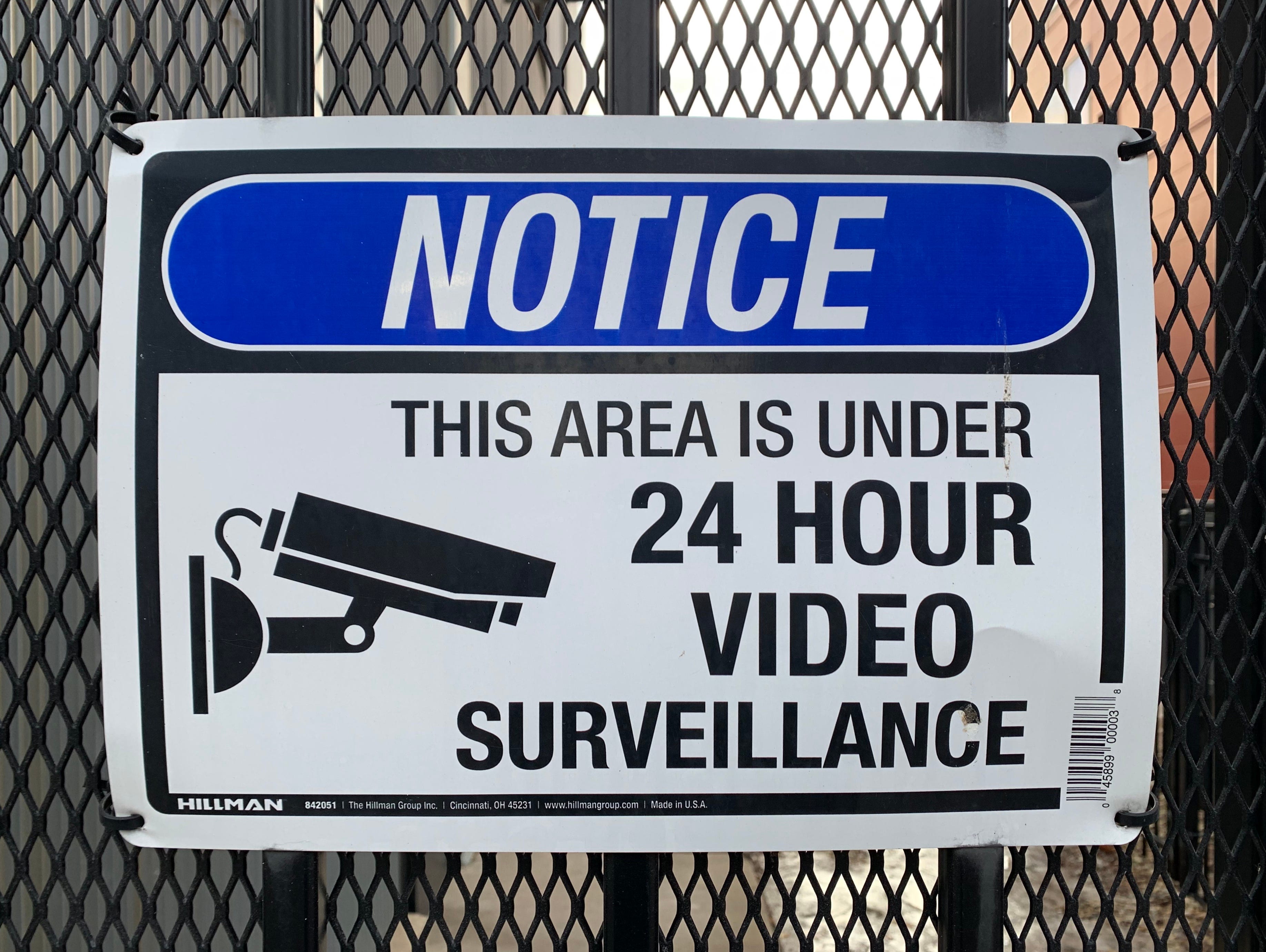
While Bauman and Lyons discuss the waning of the influence of Foucault’s panopticon, where “the few watch the many,” they offer several new alternatives, including an inverted version of the panopticon called the “banopticon,” where the few watch the many—outsiders—and keep them outside, as in the case of CCTV security cameras surrounding gated communities. Another inversion is philosopher Thomas Mathiesen’s “synopticon,” where mass media and digital platforms allow the public to monitor elites, celebrities, and politicians, in a structure of “the many watching the few.” And if you are one of the many, be aware that one study suggests the average American is caught on camera 38 times a day, and this number rises to 300 times a day in London, where there is one camera for every 13 citizens.5
An even more dystopic interpretation of the psychological effects of surveillance comes from Daniel Solove and Woodrow Hartzog, experts in privacy and technology law, who use the literature of Franz Kafka to underscore a particularly dark side of human nature. If you have ever read anything by Kafka, you know that things never end well. In The Trial, for example, the protagonist, Josef K., is arrested and put on trial without ever being told what he did wrong, yet throughout he submits to authority and its power over him, even as he is sentenced and executed—and he never does find out what his alleged crime was. According to Solove and Hartzog:
“Kafka’s writings adeptly capture people’s harrowing helplessness and vulnerability when at the mercy of powerful and opaque entities that have dossiers about them and that make important decisions about their lives.” “The most challenging and deeply disturbing dimension to Kafka’s depiction of human nature is that people are often not passive victims; they willingly participate in their peril.”
Solove and Hartzog go on to illuminate our current dilemma, describing the two competing models for controlling personal data and privacy, beginning with the predominant “individual control model,” in which each of us, as individuals, owns and controls our own information and privacy. Yet in fact, under this model, we are powerless in the face of companies and governments that constantly ask us for information, make us read long legal agreements, and then make us check boxes, so we give up and give in. The authors conclude that “individual control is often an illusion,” and that this model has been “an abysmal failure.” Instead, they promote a “societal structure model,” where “privacy is first and foremost about power and how human information is relevant in its creation, deployment, and distribution.” This model is based on a strong legal and regulatory framework that controls power—companies and governments—and protects individual privacy. Most importantly, Solove and Hartzog emphasize that privacy should be viewed as a societal value, rather than as just an individual interest.6 David Lyons sums up the current situation this way:
“To assume that ordinary people have the time, expertise, or motivation to be constantly vigilant about surveillance is to sidestep questions of justice and informational fairness. The politics of information in the twenty-first century will increasingly be about how to increase the accountability of those who have responsibility for processing personal data.”
The Lesson
I used to worry about Russian or Chinese troll farms or other criminal organizations accessing my personal data and wreaking havoc on my credit rating, but today, that seems quaint. After a year of watching our governmental institutions corrupted and destroyed, and a further two months of ICE’s occupation of my city of Minneapolis, I now worry much more about what my own government might do to me. Because, unlike those other bad actors, the United States federal government has police power over me and those I love—and, as Timothy Snyder puts it, a “monopoly on violence.”7
“In a consumer society, people wallow in things, fascinating, enjoyable things. If you define your value by the things you acquire and surround yourself with, being excluded is humiliating.”
- Zygmunt Bauman
Privacy is rarely lost in one fell swoop. It is usually eroded over time, little bits dissolving almost imperceptibly until we finally begin to notice how much is gone.
- Daniel J. Solove
Nawaz, Anna, “Whistleblower responds after DOJ confirms DOGE mishandled Social Security Data,” PBS News Hour, 27 January, 2026. https://www.pbs.org/newshour/show/whistleblower-responds-after-doj-confirms-doge-mishandled-social-security-data
Das, Shubhanjana, “ICE isn’t just tracking your phone. The surveillance technology goes further than that,” in Sahan Journal, 28 January 2026; updated 4 February 2026. https://sahanjournal.com/immigration/ice-surveillance-technology-facial-recognition-phones-minnesota/
Bauman, Zygmunt, Liquid Modernity, Malden, MA. Polity Press, 2000.
Bauman, Zygmunt and David Lyon, Liquid Surveillance, Malden, MA. Polity Press, 2013.
Melore, Chris, “Average American recorded by security cameras 238 times each week,” in StudyFinds, 24 September 2020. https://studyfinds.org/americans-security-cameras-study/; “Ratcliffe, Jonathan, “How many CCTV Cameras are there in London?,” in “CCTV.co.uk.” https://cctv.co.uk/how-many-cctv-cameras-are-there-in-london/#:~:text=London%20is%20often%20called%20the,guess%20as%20educated%20as%20possible.
Solove, Daniel and Woodrow Herzog, “Kafka in the Age of AI and the Futility of Privacy as Control,” in Boston University Law Review, Vol. 104, pages 1021-1042, 2024.
Snyder, Timothy, On Tyranny: Twenty Lessons from the Twentieth Century, New York: Tim Duggan Books, an Imprint of the Crown Publishing Group, Penguin Randomhouse, 2017.