
The Story
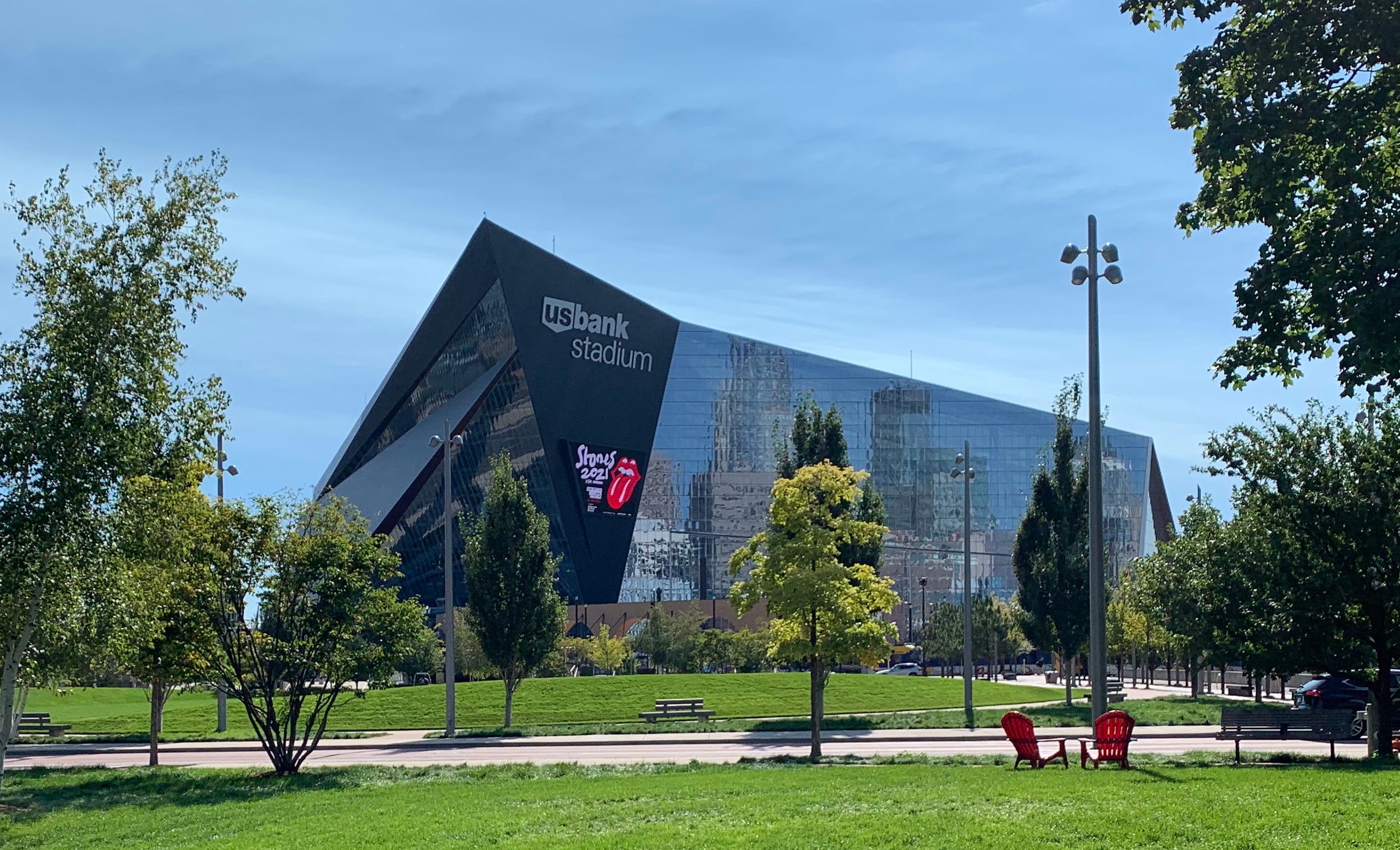
A few years ago I had a very minor role on a major project—a new, billion-dollar NFL football stadium in Minneapolis for the Minnesota Vikings. Many things about this project are too complex to explain here, but I want to share one story that gets at the challenge of ensuring transparency and participation in government. But I want to make one thing clear: this is not a story about whether to fund and build a new stadium. At the time of this story, that debate had already been settled. Rather, this is a story about the challenge of implementing an agreed-upon process.
When the project was approved and funded by the state legislature, the “stadium legislation” included a unique requirement for how the project would seek and obtain approvals: Rather than the typical review and approval process involving city planning staff, planning commissioners, and council members, the project’s approvals would be granted by a special “stadium committee” whose members would be appointed by the mayor just for this task. The legislation also dictated a twelve-month duration for schematic design that was tied to the funding of the project. This meant that if the stadium committee were to vote not to approve the design after twelve months, there would be no time for redesign, the state would not sell bonds, the funding structure would collapse, and bye-bye stadium. To be fair, legislation is always drafted quickly, under pressure, and is subject to much revision prior to passage, and while it seems unlikely that anyone was deliberately trying to create this time bomb, there it was. Our job was to facilitate the work of the stadium committee and, more specifically, to do whatever we could to make sure the design got approved at that last meeting, twelve months away.
This set-up immediately presented two unique and related challenges: First, the committee had 27 members with a wide range of expertise, experience, and interests; and second, all meetings were public, and since it was such an important project, there would be television cameras in every meeting. My client and I worked with the two committee co-chairs to draft the agenda for each monthly meeting so that the discussions stayed on point and moved towards future approval without veering off track or stirring up unnecessary controversy. But after the first couple of meetings where the architect—who had been hired by and was working under the direction of the team owners—presented early designs, two architects on the committee, one of whom was the co-chair, asked if they couldn’t just meet with the architects in a smaller, more informal setting to discuss the design and share the committee’s ideas, away from the bright lights of the TV cameras.
For the design phase, there were three main parties involved: The City, the team’s owners, and the facility owner, a governmental agency called the Minnesota Sports Facilities Authority. The City contributed 14% of the funds, the state 33%, and the team owners 52%, which is why they had control over hiring and managing the architect. The City and the team owners were effectively both clients, and the City was leading the monthly review process. Still, this very public process caused the team owners – private sector businesspeople - to want to retain control of the design process, which meant minimizing external influences. So, when those two architects asked to be included in the process, we saw a threat, and a potential opportunity. The threat was that if they were excluded from the process after asking to be let into the room, there would be less input, understanding, ownership, and support for the design from these two key people, who, because of their expertise and reputations, were trusted by many of the other committee members. And from the perspective of these two architects, if the only discussions of the design were the monthly committee meetings with the TV cameras rolling, how would there ever be a feeling of “we, the team, working on this together?” If, however, they could participate in the process and have some influence outside of public channels, they would be able to represent to the larger committee and the public that the stadium architect was listening to their concerns and ideas, and this collaboration might lead the committee to better understand and support the process and the final schematic design.
So we met with our counterpart at the Minnesota Sports Facilities Authority, who was the intermediary between the city and the owners, and we made our case. At first, they were skeptical that the team’s owners would be open to this idea, but then we explained how a few informal meetings might increase the chances of approval, and that is when the lightbulb went off. Our request and talking points were passed along, and the owners agreed, and there were a few meetings and a dinner or two. More importantly, the two committee members became informal members of the design team, and when it was time to vote the following August, the committee approved the design unanimously.
The Theory
According to one study of local governments in the United States, transparency and participation are two different approaches and mechanisms to ensuring government accountability. Transparency means the public can see and understand the structures, processes, and products of government. Participation means they are allowed a substantive role in those processes and outcomes, in terms of the quantity, quality, and diversity of input. Not surprisingly, community development departments and mayor’s offices offer higher levels of both, because of the political nature of the issues, and because those are the two places where the big, public, and typically controversial projects land. But the relationship between participation and transparency is unidirectional, so while stronger influence from external stakeholders can lead to higher levels of participation, it can also reduce transparency. Further, more information and transparency do not equate to more participation. Finally, while some amount of transparency is required to ensure accountability and allow external scrutiny, some studies have cautioned that too much transparency can be “too much of a good thing” and damage public trust and performance.1
Another study highlights the differences between external and internal transparency, specifically in the case of public-private-partnership projects, or PPPs. External transparency is what we more commonly think of when the public is kept informed, and it has to do with how much an entity reveals relevant information to external stakeholders. External transparency is good for accountability, reducing corruption, and increasing trust and legitimacy. Internal transparency has to do with the relationship between the private and public partners, and how well they communicate their expectations and share information with one another.2
But with PPPs, government transfers risk and responsibility for project delivery to private firms, and this creates a strong tension between efficiency and democratic requirements for openness. Transparency becomes more complicated in this context, where there are multiple parties to the agreement, each with different expectations and interests. While much scholarship is focused on external transparency, the authors of this study argue that to achieve external transparency you must first have internal transparency, where the public partner is clear about its expectations and the private partner provides insight into its performance. Internal transparency is about ensuring that there is alignment of interests between the two parties.
The study then considers three analytical perspectives on transparency: The institutional perspective has to do with rules and standards; The strategic perspective has to do with political considerations, for example, when to reveal information and how to use it to one’s advantage; and the cognitive perspective has to do with how useful and understandable the information is. So, for example, if the public partner is not clear in its “institutional” rules and standards, then the private partner faces “cognitive uncertainty” and may engage in “strategic behaviors” that reduce transparency. In some cases, PPPs limit the opportunity for meaningful transparency, which can lead to the sharing of information that is misleading, inaccurate, or inadequate.
The Lesson
It’s easy to say, “we need transparency,” or “participation,” or “accountability,” but it can be tougher to strike the right balance between these different goals. Further, when it comes to a once-in-a-generation mega-project, where the institutional framework for reviewing and approving the design is created from scratch on a tight deadline, it leaves everyone involved to build the ship while they are sailing it. That’s how the drafting of the stadium legislation created a (most likely) unintended pinch point that left no maneuvering room for redesign. That’s also how the 27-member Stadium Committee schedule of 12 very public, monthly meetings, and an approval deadline a year later, created a situation that, while maximizing external transparency, threatened internal transparency and participation, and increased risk to the approval and funding of a project that had already been agreed upon. And that’s what led us to try to increase participation by building an informal bridge between those two committee members and the team owner’s architect. One could argue that our solution reduced external transparency, but our response would be that it increased internal transparency, which was ultimately good for the project and all parties to it. At least, that’s how I remember it. One last thing: If I had to guess, hundreds if not thousands, of little conversations like the one I just described took place over the several years it took to plan, design, fund, and build the stadium.
One last little story
One last anecdote highlights the risks and challenges that come with showing realistic computer renderings too early and in public. This usually happens because key people want to see images when the design process has barely started. In a briefing to some city council members, the team owners’ architect showed several different images of what the stadium might look like, stylistically. One showed a set of big, white, puffy volumes, kind of like the Michelin man lying on his side. I couldn’t put my finger on what it reminded me of, and why I didn’t like it, until one council member said,
“Look, we all know it’s cold here, so please don’t design something that looks like a f****** igloo.”
Bureaucracy always seeks the path of least disclosure.
- Darrell Evans, FIPA
Government ought to be all outside and no inside. . . . Everybody knows that corruption thrives in secret places, and avoids public places, and we believe it a fair presumption that secrecy means impropriety.
- Woodrow Wilson
It amuses me to see the profound change in attitude about access to information which occurs when highly placed insiders suddenly find themselves on the outside. And vice versa!
- John Reid, 1999, Virginia Politician
“This is supposed to be a participatory democracy and if we’re not in there participating then the people that will manipulate and exploit the system will step in there.”
- George Takei
Welch, Eric W., “The relationship between transparent and participative government: a study of local governments in the United States.” In International Review of Administrative Sciences, 78(1), pages 93-115, 2012.
Reynaers, Anne-Marie and Stephan Grimmelikhuijsen, “Transparency in Public-Private Partnerships: Not So Bad After All?” In Public Administration, 93(3) pages 609-626, New York, John Wiley & Sons Ltd.