
The Story
In 1988, I took a new job in a big architectural/engineering firm in Philadelphia. My new boss was an old architect named Bill who had flown in torpedo bombers off of an aircraft carrier in the South Pacific during World War Two. So, while I was just beginning my career, he was coming up on retirement. Bill had the perspective of someone who had seen the worst life has to offer by the age of 21, and he was a simple, straight-shooting kind of guy who didn’t get knocked off balance easily. His cubicle was uncluttered, and the walls were bare, but for one tattered piece of 8.5x11 copy paper tacked to the center of one wall that said this:
Six Phases of a Project
Enthusiasm
Disillusionment
Panic
Search for the guilty
Punishment of the innocent
Praise and honors for the non-participants
This cynical little poster summed up the most typical of project trajectories in a way that I was simply too young to have learned yet. And while not all projects take this path, as you managers out there know, many do.
The Theory
According to Gemini, and like Bill’s poster, there are numerous lists of the “six phases” of a project, so here is one example:
Six Phases of a Project
Initiation Phase
Definition Phase
Design Phase
Development Phase
Implementation Phase
Follow-up Phase
Shall we go into detail on the six phases? Nah. Better yet, let’s get back to Bill’s little Xerox list and explore the REAL Six Phases of a Project through some of my favorite movie scenes.
1. Enthusiasm
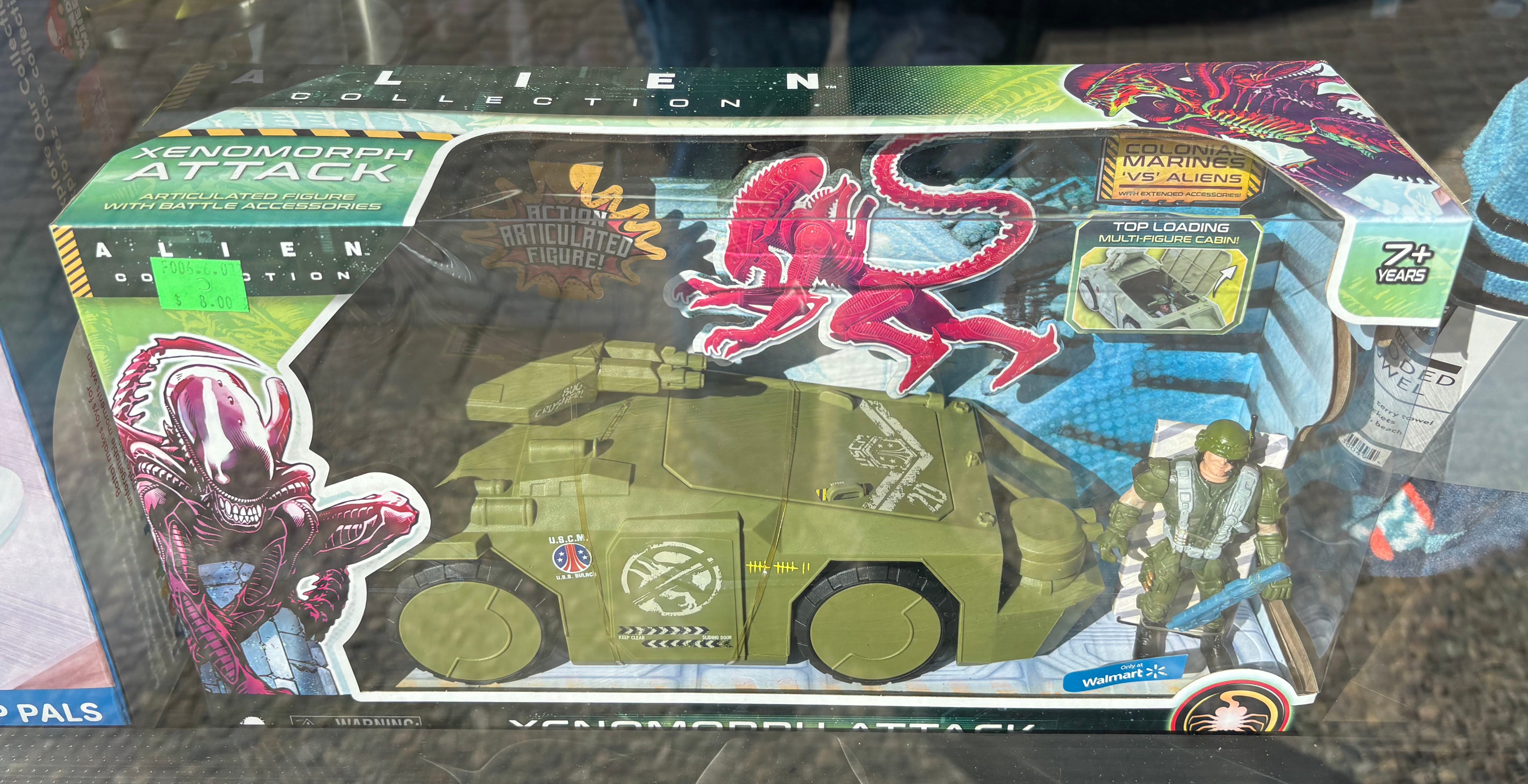
I love the movie Aliens, which is perhaps one of the best movie sequels ever, and very different from the first movie. Alien was a scary-as-hell science fiction horror film directed by Ridley Scott, and the tagline on the movie poster was “In space, no one can hear you scream.” Aliens, the sequel, was a science fiction action film directed by James Cameron, and the poster said, “There are some places in the universe you don’t go alone. This time it’s war.” In Aliens, a Colonial Marine Corps squad is sent to the same planet where the alien was discovered in the first movie. The planet has since been colonized but has recently stopped sending signals. This squad is sent on a mission to find out what’s going on, aid the colonists, and eradicate the Aliens, if necessary. The soldiers are a future vision of the marines we are familiar with, dressed in green fatigues and armored up with big vehicles and weapons. The corporate bad guy, Burke, played by Paul Reisser, tries to reassure the heroine, Ripley, played by Sigourney Weaver, telling her, “These colonial marines are tough hombres packing state-of-the-art firepower.” They are also full of bravado and confidence and, yeah, enthusiasm. After learning what their mission is, a character named Private Hudson, played by Bill Paxton, starts a conversation amongst his fellow soldiers by asking one fateful question:
Hudson: “Is this going to be a stand-up fight, sir, or another bug-hunt?”
Gorman: “All we know is that there’s still no contact with the colony and that a xenomorph may be involved.”
Frost: “A what?”
Hicks: “It’s a bug-hunt.” [personal aside – I use this term for something that looks routine but…]
After some macho Marine chatter, Vasquez, the tough female Marine, says,
Vasquez: “Look, man, I only need to know one thing…where they are.”
Then she points her finger, cocks her thumb, and blows away an imaginary alien, and there is more macho Marine talk, until Ripley, who knows a lot more about these aliens, locks eyes with Vasquez and says,
Ripley: “I hope you’re right. I really do.”
These marines are in the throes of Phase 1, Enthusiasm, but Ripley does not share in their confidence, because she suspects that Phase 2, Disillusionment, is right around the corner.
2. Disillusionment
Steven Speilberg’s first huge blockbuster movie, Jaws, came out in the summer of 1975, and became famous, or infamous, for two big reasons. First, Spielberg used the music and sound score to create a growing feeling of tension, menace, and then fear, because you don’t actually see the shark in its full glory for the first time until 81 minutes into the 130-minute movie. Second, in what became known in economic development circles as “The Jaws Effect,” the movie had a terrible impact on tourism and the local economies of beach towns up and down the Atlantic coast that lasted throughout the rest of the 1970s. Evidence of this effect can be found in the brilliant promotional tagline for the 1978 sequel: “Just when you thought it was safe to go back in the water.” The Jaws story is simple: A very large great white shark is preying upon swimmers in a fancy Martha’s Vineyard-like beach town, and while the mayor, who is more concerned with economic impacts and his own reelection prospects, tries to downplay it, the bodies keep piling up. Finally, the town’s Police Chief, Martin Brody, played by Roy Scheider; a marine biologist named Matt Hooper, played by Richard Dreyfuss; and a professional shark hunter named Quint, played by Robert Shaw, band together and set out in Quint’s boat, the Orca, to hunt down the shark. After some fits and starts and the discovery of more shark-bite-related evidence, the unexpectedly huge beast finally reveals itself by breaching right alongside the Orca, right in front of Chief Brody. In shock, Brody delivers one of the best, if darkly comic, lines ever uttered in a movie:
“We’re gonna need a bigger Boat.”
That’s also when the trio realizes they are completely out of their depth, and when disillusionment sets in. As one of my favorite old sayings goes, “It’s always darkest before it turns totally black.” Disillusionment naturally leads to Phase 3: Panic.
3. Panic
Back to Aliens. After landing on the planet, everything starts going wrong, and the space Marines realize that they are being surrounded by many fast-moving, tenacious, and bloodthirsty aliens. Just when rescue is in sight, they watch their rescue drop ship spin out of control, crash and explode, stranding them, and leading to this exchange between Ripley and the remaining marines:
Ripley: “How long after we’re declared overdue can we expect a rescue?”
Hicks: “About seventeen days.”
Hudson (hysterical): “We’re not going to make it seventeen HOURS. Those things are going to come in here, just like they did before, man, they’re going to come in here and GET US, man, long before….”
Ripley (pointing at the little girl, named Newt): “She survived longer than that with no weapons and no training.”
Private Hudson: “Right, why don’t you put her in charge?!”
Hudson’s last comment is also a nice reflection on how a team can rapidly lose confidence in leadership when the going gets tough, but I’m getting ahead of myself. After everything has gone wrong, we move onto Phase 4, the Search for the Guilty.
4. Search for the Guilty
James Elroy’s neo-noir crime thriller, L.A. Confidential, takes place in the 1950s, when corruption is rife in the Los Angeles Police Department. Detective Sergeant Jack Vincennes, played by Kevin Spacey, is on a special assignment to help clean things up when he uncovers an abandoned investigation into corruption that may have something to do with his trusted friend, mentor, and boss, Captain Dudley Smith, played by James Cromwell. But Vincennes can’t quite fit all the pieces together, so he visits Smith at his home late at night, and as they sit in the kitchen having coffee, Smith in his bathrobe, Vincennes explains his concerns, which unfortunately leads to Phase 5, Punishment of the Innocent.
5. Punishment of the Innocent
That’s when Smith suddenly produces a revolver and shoots Vincennes in the chest. The look of shock on Vincennes’s face before he dies after being shot by his friend is unforgettable. So, to recap, the good guy who is searching for the bad guys gets killed by one of the bad guys, whom he thought was one of the good guys. Despite all of this misfortune, in the end, something gets completed or accomplished, which leads to Phase 6: Praise and Honors for the Non-participants.
6. Praise and honors for the non-participants
The 1999 movie Office Space opens in a generic cube farm at a faceless company called “Initech.” Peter and two other frustrated co-worker friends who are overmanaged and bored out of their minds have devised a scheme. Using their computer coding skills, they develop and launch a little program on the company server that shaves a penny off each transaction the firm makes and diverts it to a private account. Because of a coding mishap and a misplaced decimal point, the scheme works a little too well, and within days the three friends are horrified to find out that there are several hundred thousand dollars in their new account, which is growing fast. The three decide to shut down the program and make amends, so at the end of the day, after everyone has gone home, Peter slides an envelope filled with the cash and an explanatory note under the door of their boss, Bill Lumbergh. Early the following morning, long-suffering Milton, of the red stapler, comes in to have it out with the boss and, after knocking, he opens Lumbergh’s unlocked office door. Lumbergh isn’t in yet, but then Milton looks down and picks up the envelope. When the three friends arrive for work a little later, the building is engulfed in a five-alarm blaze, and the last scene is Milton, on a beach in the Caribbean, sipping a brightly colored drink with an umbrella in it.
The Lesson – Back to the six phases
Okay, this all sounds a bit melodramatic, but admit it – few projects go according to plan, and some are visited by “disillusionment,” “panic,” and “the search for the guilty.” Sometimes they go right off the rails, running through all six phases. So, think back: What was your most successful project…and your most disastrous one?
“That’s it, man. Game over, man. Game over!”
- Private Hudson, in Aliens
“Don’t start trying to do the right thing, boyo. You haven’t had the practice.”
- Captain Dudley Smith, in L.A. Confidential
“I’m gonna need you to come in on Saturday.”
- Bill Lumbergh, in Office Space
Note: A few years ago, I had the good fortune to work for six years on a big, complicated project with a guy named Don Elwood. We were the same age, and we often regaled each other and our teammates with scenes from movies of a certain era that somehow reminded us of situations we were facing in the moment. And that’s why you have Don Elwood to thank for the scene from Aliens where Hudson says, “Right, why don’t you put her in charge?!”