
Hi everybody, and happy fall! Today, I want to give you a little preview of what you have to look forward to in Season Four of The Reflective Urbanist, starting next Wednesday, September 9!
First, I hope you have all enjoyed the time off, but speaking for myself, it has been another summer of mild disarray, and I’m looking forward to cooler, more organized days ahead. I’ve mentioned before that I’m an October baby, and for me the new year begins in the fall, when some of us go back to school, or at least get back into some semblance of a routine.
As a way to jolt myself back onto the tracks, I like to start The Reflective Urbanist season off with a theme episode, so, for example, I started season 2, this time last year, by using the Rodney Dangerfield movie Back to School to highlight the importance of constant learning to personal growth and happiness. I started season 3, in January, during the winter of Operation Metro Surge, ICE, and the federal government’s invasion of Minneapolis, with the idea that freedom in public space is central to democracy. Lately I’ve been thinking about my own career and a subtle shift I’ve been making, and that’s why this fall’s season premiere episode will be about identities and how they change as we grow and evolve in our work and lives.
More generally, each season I like to focus on one area of city building. In past seasons I have talked about bureaucracy, business dos and don’ts, public finance, and how interviews and presentations can go right…or wrong. Last season, after receiving specific requests from a few of you, I concentrated on real estate developers: what they really do, when they make their money, and the role that luck plays in their success and failure.
This season, I am going to focus on large and complex public realm projects. We’ll talk about everything from initial planning through implementation, including managing diverse project teams, collaborating with a wide array of stakeholders, politics and funding, the pros and cons of public-private partnerships, the rewards and challenges, and the roles played by all the different actors in the process. I’m talking about the kinds of project teams that, when you get everyone together for the group photo, look like the climactic triumphal march scene from Verdi’s opera, Aida, with everyone on the stage, including live elephants.
We’ll cover a lot of ground, starting with the origins of the term “urban design,” and then we’ll develop the actual cast list, including not just the architects, landscape architects, and planners, but also civil engineers, city staff and elected officials, private property owners, real estate developers, big donors, nearby residents, and a range of special interests from historic preservationists, to the Audubon society. As the saying goes, it takes a village, but getting the village to work together is a taller order.
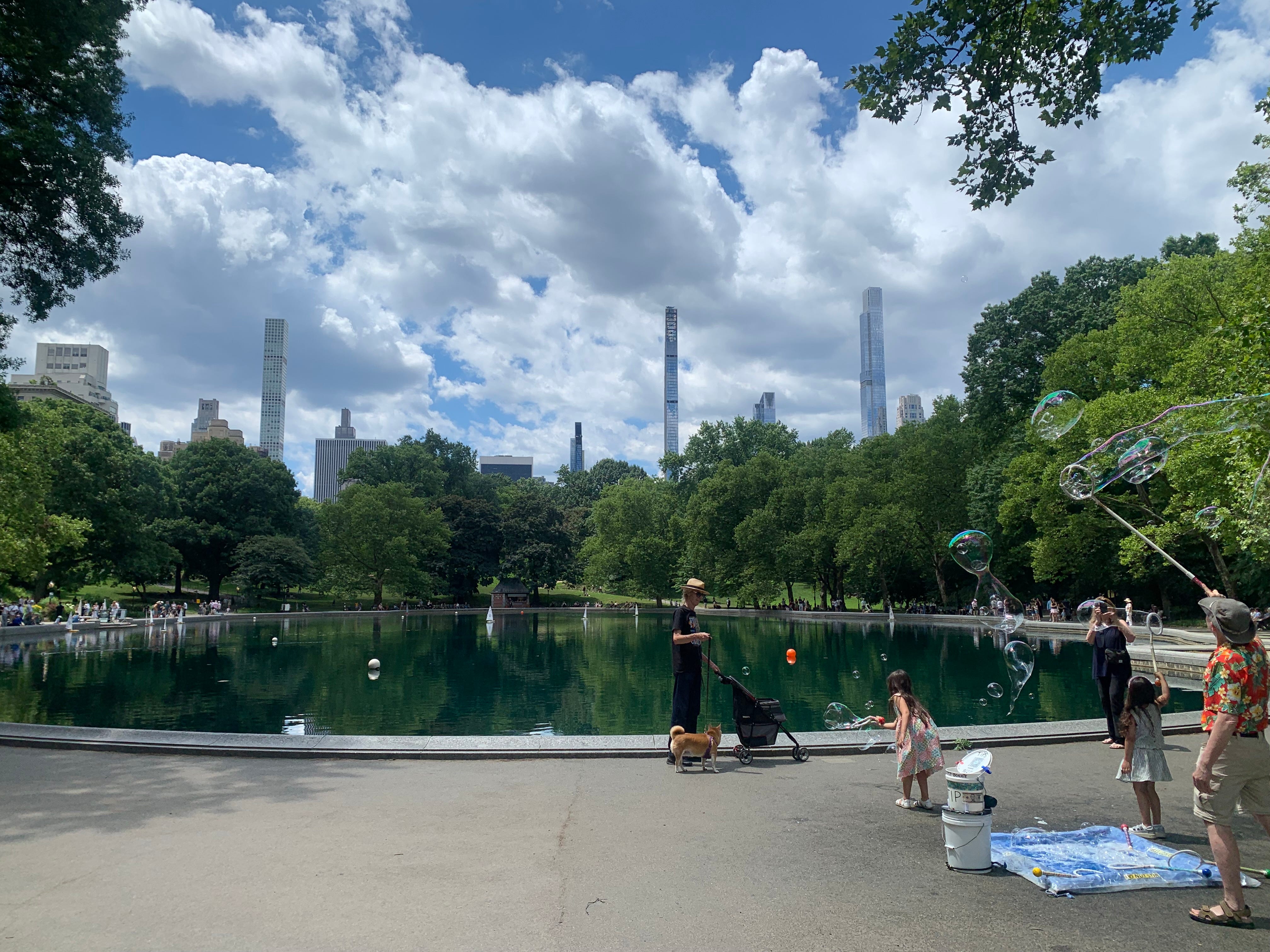
With all of that said, you can be confident that I will still range all over the place, breaking my story/theory/lesson template and wading into topics well beyond those I just described. For example, you can look forward to a special episode about my own personal history with New York City, inspired by a family trip earlier this summer.
I want you to know your feedback, as well as the “analytics” from Spotify, Substack, and WIX, to the extent I understand any of it, have convinced me that my most popular posts are those that combine my own stories with carefully selected scenes from film, television, and literature to drive a big point home. Yes, I have enjoyed using Robocop, Franz Kafka, Monty Python, Saturday Night Live, and The Big Short to help you visualize what I’m talking about, and you’ve let me know that it works. So, I may be going a little bit overboard this season, but I have a couple of episodes coming that will use a lot of movie scenes. One is about the REAL six phases of a project, and the other is based on a decades-old fantasy of mine. You see, I have always wanted to develop and teach a course called “Management in the Movies!” Sadly, this is a course that seems unlikely to happen in real life, at least my version of it, but I’ll give you a preview, and who knows, if you all like it, maybe I’ll plan a lucrative conference at an expensive resort! Anyhow, I think you will enjoy both of those episodes, and everything else that is coming your way in the next four months.
And since talking about all these movie scenes might give you the impression that I have an exalted view of my own actual day-to-day work and life, I decided to go back and re-read James Thurber’s famous –and hilarious—1939 short story, “The Secret Life of Walter Mitty.” This led me to do some research on the story, and to develop a little meta-narrative on why some of us fantasize about heroic acts while we are going about our dull, quotidian lives. Some of you may remember the old Dunkin Donuts commercial with the guy repeatedly showing up every morning, in the dark, and saying, “Time to make the donuts.” Some of us need a little more from life than that, even if it is just a fantasy, so this season you have more on Walter Mitty to look forward to, as well.
Before I go, I want to thank Sheila and Clare at One Main Circuit for all they have done – and continue to do – to make The Reflective Urbanist such a success. They edit the audio, add music and sound effects, and breathe life into what might otherwise be some pretty dry stuff. Indeed, the number one comment I continue to receive from all of you is that the podcast’s super-high production quality is one reason why you all keep listening. So, as always, let’s all offer thanks to Sheila and Clare!
Thanks to all of you for continuing to listen to The Reflective Urbanist. And tune in next Wednesday, September 9th, for the Season Premiere: “The GI Joe with the Kung Fu Grip.”