

The Story
At my architecture school, we spent a lot of time studying and designing projects for odd-shaped sites in the centers of old European cities, always starting with black-and-white figure/ground plans of the site and surrounding area. Many of us also studied abroad during the summers, in Rome, Venice, Vicenza, the Greek Islands, Berlin, Copenhagen, Stockholm, and other European cities that had old, more organic plans driven by nature and topography, and layers of history, context, and architectural styles. Colin Rowe was our guiding light, and he and Fred Koetter had just published Collage City, in which they condemn Le Corbusier’s grand modernist city à la Plan Voisin for Paris as a failure, and a spurious idea to begin with.1 Instead, they argue that at the building scale, architecture should shape formal space rather than offer up a series of disconnected formal object buildings and grand plazas that feel vacant and unwelcoming. As importantly, at the city scale, they conclude that, rather than a blank slate approach, we are always adding to an existing context, which we must come to understand before starting design work, hence those early figure/ground drawings. For Rowe & Koetter, the city is a rich collage, and we are merely integrating a new piece into it. This form of contextualism is the lens through which I view how to plan and design for the city, but I know it is just one of many, so let’s get to the main question: What, exactly, is “Urban Design?”
The Theory
While the idea and practice have been around for millennia, the term “urban design” was first coined by Josep Lluis Sert, the Dean of the Harvard Graduate School of Design, who organized a first-of-its-kind conference on the subject in 1956. Attendees included prominent urban thinkers and practitioners of the time, including I.M. Pei, Jane Jacobs, Edmund Bacon, Ian McHarg, Lewis Mumford, Kevin Lynch, and many others. The fifties were the era of Urban Renewal, when cities, with massive federal government assistance, had the resources to envision and build large urban projects and whole districts to counteract the hollowing out of American cities caused by a half-century of suburbanization. But Urban Renewal involved both creation and destruction, as exemplified by one of the best titles of its time, Martin Anderson’s 1964 book, The Federal Bulldozer, which revealed that urban renewal had destroyed more affordable housing than it had created.2 Worse, these grand plans were often based on modernist principles that people like Sert and others of the time were beginning to turn against. After decades of Le Corbusier-inspired soulless modernist plazas, housing projects, and commercial centers, enlightened practitioners of planning and design who had become disillusioned by the real failures of the modernist city began to argue for a new approach to city design. Sert envisioned this new field of “urban design” as a cross-disciplinary activity involving three disciplines—architecture, landscape architecture, and city planning—that bridged large-scale plans and design at the individual building, park, and street level.
Alex Krieger and William Saunders’ 2009 edited volume of essays, Urban Design, begins with an introduction by Krieger, in which he outlines the contributions of the different authors. Krieger argues that the collection summarizes the current state of urban design as seen through three themes, each with its own set of internal tensions.3
The first theme is the shifting of allegiances and roles among the three disciplines since the conference of 1956. While many viewed architects as being in the driver’s seat, planners played a major role during Urban Renewal, as powerful city officials backed by federal funding, like Philadelphia’s famous planning director, Ed Bacon (a trained architect), and the Boston Redevelopment Authority’s Ed Logue, made large-scale plans for the redevelopment of their cities. Planners and their departments and staff then receded into the background as federal funding dwindled, leaving physical planning and design to others as a new generation of planners shifted their focus to social science. Only in the past quarter century have planners re-emerged as a discipline focused on the physical environment, taking the lead in the planning and implementation of urban projects, playing an especially important role in leading community engagement processes. While initially included in the trio of disciplines, landscape architects were viewed as the folks greening up the big public spaces, although in recent decades they have emerged as central to the process. Through the thought leadership of James Corner, the now well-developed practice of “landscape urbanism” has demonstrated that to be successful, urban design must take a systems approach and address existing conditions and infrastructure, blending old with new, and built environment with nature and habitat, and that landscape architects are the most qualified practitioners to lead that process.
The second theme is the tension that has long existed between preserving and revering the old and engaging in innovation that responds to contemporary issues and context. The spectrum runs from pure preservation and the dogmatic protection of anything old regardless of merit, to the desire to integrate new knowledge, practices, technologies, materials, and systems, from new uses for old infrastructure to stormwater management, habitat protection, and environmental remediation. Among other pressing concerns, this tension addresses sustainability and the recognition that the thoughtlessly routine demolition and replacement of existing buildings made of embedded carbon is bad for the environment and the planet. This theme also juxtaposes the powers and limits of returning to traditional motifs and ideas, as in the principles of New Urbanism that hark back to a different urban time, as applied to suburban and exurban land, vs. the embrace of new technologies and big, bold plans for large areas that rely on new uses, technologies, and ethical frameworks.
The third theme asks how best to bring expertise to the planning and design process while at the same time recognizing the role and needs of the community. Decades of grand visions with little community input have led to distrust of experts, so planners and other urban design professionals must now spend an increasing amount of time and effort developing community engagement methods that will yield real participation and input and build community rather than alienate it. This challenge has only grown, as illustrated by Tom Nichols’ excellent book, The Death of Expertise, to the point where experts and their opinions are routinely discounted or dismissed entirely, while non-experts, after fifteen minutes on Google, Instagram, YouTube, or ChatGPT, proclaim to know everything.4 The tension here is between the ability to develop a coherent vision for a place or project that integrates needed expertise while genuinely reflecting the community’s interests and desires. It also highlights the fact that, in a world of sometimes complementary but often competing, if not conflicting, interests, no one gets everything they want and, as the saying goes, in the end, “the best project is one where everyone is equally dissatisfied.”
Beyond these three tensions, a handful of the essays in Krieger and Saunders’ book highlight some other interesting changes and approaches that seem particularly relevant today.
Denise Scott Brown, who is both an architect and a planner, as well as a practitioner and an academic, pleads for architects to collaborate more with social scientists, commenting that
“I agree when he [Lloyd Rodwin] suggests that architects, planners, and landscape architects ‘rank among the least important of the forces’ and that urban design may be held back by the thinness of its intellectual and artistic capital.”
Scott Brown also highlights an important shift that occurred when the Urban Renewal era, along with its federal funding, drifted into history, and the private sector began to fill the urban design gap left behind by the retreat of the public sector. By the 1990s, aside from university campuses, the only clients seeking urban design services from her firm were private corporations.
“Here urban designers who work for developers or development groups endeavor, as they should, to understand the needs of their clients and, with the backing of the urban renewal agency and the chamber of commerce, to assert these forcefully in the city. They and their clients are more experienced and better funded than other urban designers.”
Scott-Brown concludes that the public sector played a big role in earlier days,
“…but eventually, the private sector became what was hip.”
Timothy Love goes a step further than Scott-Brown, arguing that urban design today occurs at the intersection of real estate development and the regulatory environment, starting his own essay with this statement:
“Large-scale urban design in America is now directed mostly by sophisticated private real estate companies and no longer by public or quasi-public agencies and authorities. As a result, new strategies should be developed that leverage the inherent mechanisms of real estate development as ways to generate more innovative design proposals. For architects and urban designers to capitalize on the new economy, they need to understand the economic and regulatory underpinnings that drive development decisions.”
Michael Sorkin concludes that urban design has become a hollow form of preservation that relies on the idea that formal preferences for the traditional in planning and design will more likely lead to consent. However, beyond acting as guardians of the “historic,” there has been less thought about what urban design is actually trying to preserve. In this case, urban design as preservation offers a path of least resistance, one that will generate the most support and minimize conflict. Sorkin then goes on to contrast this shallow preservation with the alternative of large-scale and mega-scale projects, in what he calls
“The division between faux and fab.”
Sorkin concludes that the answer must fall somewhere in the middle and serve the needs of real people, and that
“A future for urban designing must not dictate the good life, but instead endlessly explore the ethics and expression of consent and diversity.”
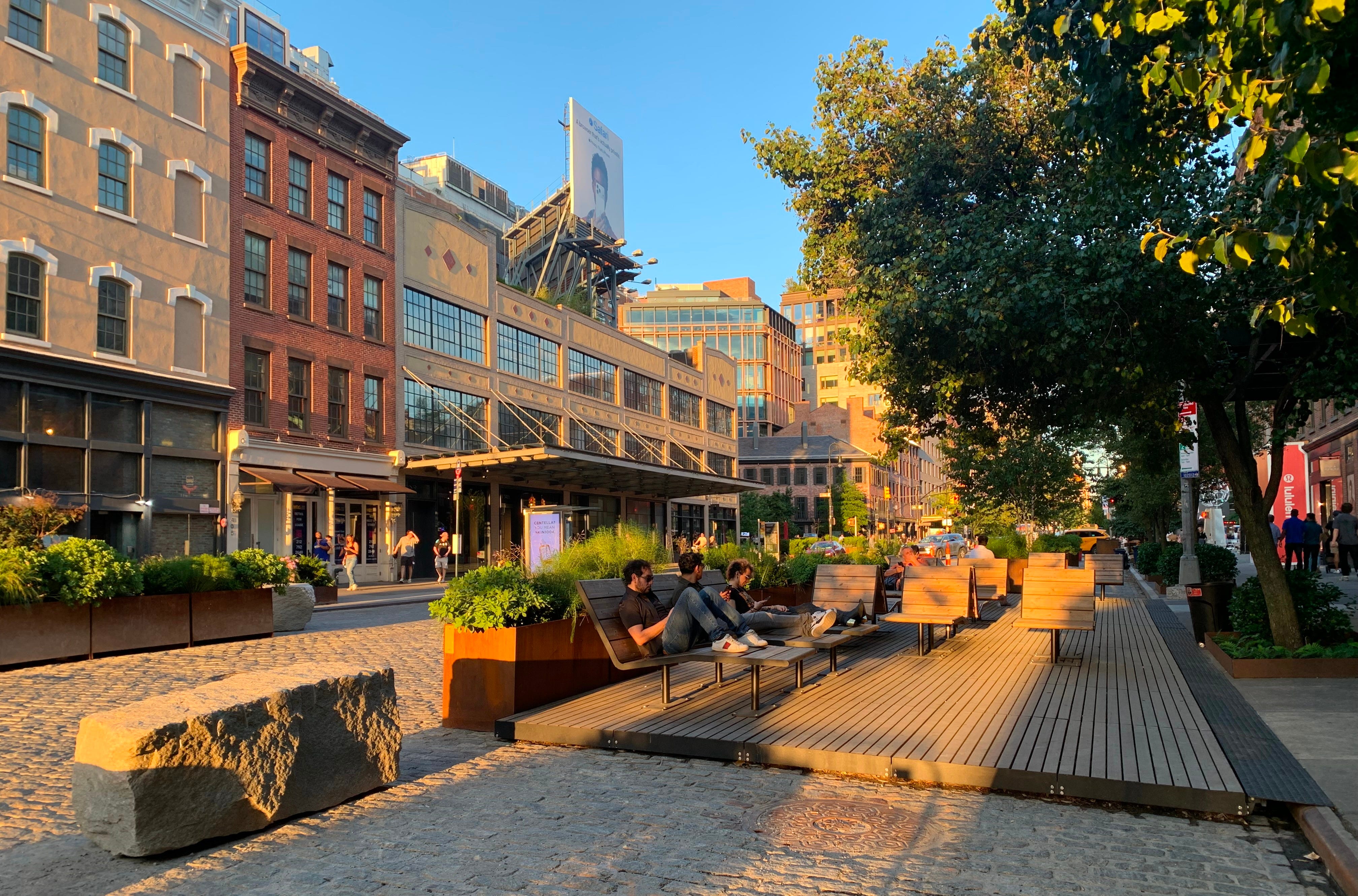
I’ll add one new idea, based on my own experience. Since this book’s publication, 17 years ago, a whole new world of urban design has grown up around reducing the dominance of automobile-centric planning in cities, specifically through the provision of transit and pedestrian and bicycle facilities, and an emphasis on mode-shift: Getting people out of their cars and onto other modes of transit. This movement was exemplified by Jeanette Sadik-Khan’s work as Commissioner of New York City’s Department of Transportation, her department’s aggressive conversion of vehicle travel lanes into public realm space, and her book chronicling those efforts, “Streetfight: Handbook for an Urban Revolution.” Because of this work, the public sector is once again playing a major role in urban design in cities around the country, and since these types of facilities are provided when streets are rebuilt, there is a significant and stable funding stream, as streets must be rebuilt over and over again. We will get further into urban design actors in a coming post/episode, but for these types of projects that occur in the public right-of-way, teams of planners and civil engineers – who were excluded from Sert’s 1956 triumvirate – lead the process.
The Lesson
For the lesson, I’m going to end with a list and a question. In addition to the introduction, Krieger contributed another essay, “Where and How Does Urban Design Happen?” which he concludes by offering “ten spheres of urbanistic action that people calling themselves ‘urban designers’ have assumed to be their professional domain:”
1. The Bridge Connecting Planning and Architecture
2. A Form-Based Category of Public Policy
3. The Architecture of the City
4. Urban Design as Restorative Urbanism
5. Urban Design as an Art of Place-Making
6. Urban Design as Smart Growth
7. The Infrastructure of the City
8. Urban Design as “Landscape Urbanism”
9. Urban Design as Visionary Urbanism
10. Urban Design as Community Advocacy (or Doing No Harm)
As both an architect and planner, urban design feels broad and unbounded to me, much like city planning, which is why I think Krieger’s answer to the question, “what is urban design,” resonates most with me:
“Urban design is a frame of mind,”
…not a technical discipline. So I’ll end with this question: How do YOU define Urban Design, and which of the ideas on this list resonate most for you?
“In 1982, I summed up my experience as an architect and planner on both sides of this situation: ‘Lacking urban knowledge and architectural depth, urban designers fall between two stools; planners declare their prescriptions unrealistic and architects find their designs untalented.’”
- Denise Scott Brown
“’New Urbanism’ and Koolhaasian ‘Post’-Urbanism’ represent a Hobson’s choice, a Manichean dystopianism that leaves us trapped between The Truman Show and Blade Runner.”
- Michael Sorkin
“Urban design is less a technical discipline than a mindset among those of varying disciplinary foundations seeking, sharing, and advocating insights about forms of community. What binds urban designers is their commitment to improving the livability of cities, to facilitating urban reinvestment and maintenance, and indeed to enhancing urbanity.”
- Alex Krieger
Rowe, Colin, and Fred Koetter, Collage City, Cambridge: The MIT Press, 1978.
Anderson, Martin, The Federal Bulldozer: A Critical Analysis of Urban Renewal, 1949-1962, Cambridge: The MIT Press, 1964.
Krieger, Alex, and William Saunders, Urban Design, Minneapolis: The University of Minnesota Press, 2009. The essays by Krieger, Denise Scott Brown, Timothy Love, and Michael Sorkin that I discuss in this post are all contained in this book, which I recommend highly to anyone interested in the broad and fascinating question of what constitutes urban design today.
Nichols, Tom, The Death of Expertise: The Campaign against Established Knowledge and Why it Matters, 2nd Ed., New York: Oxford University Press, 2024.