Back in the USSR
Surveillance Part 1 - The Panopticon

The Story
I spent the summer of 1984 traveling through Scandinavia on an architectural study abroad program. We traveled west to east from Denmark, through Sweden and Finland (we skipped Norway-don’t ask why), and then we drove over the border into the Soviet Union. We spent about a week in St. Petersburg, formerly and now, again, known as Leningrad. This was before Perestroika, and it was a pretty authentic USSR experience for a bunch of Cold War kids.
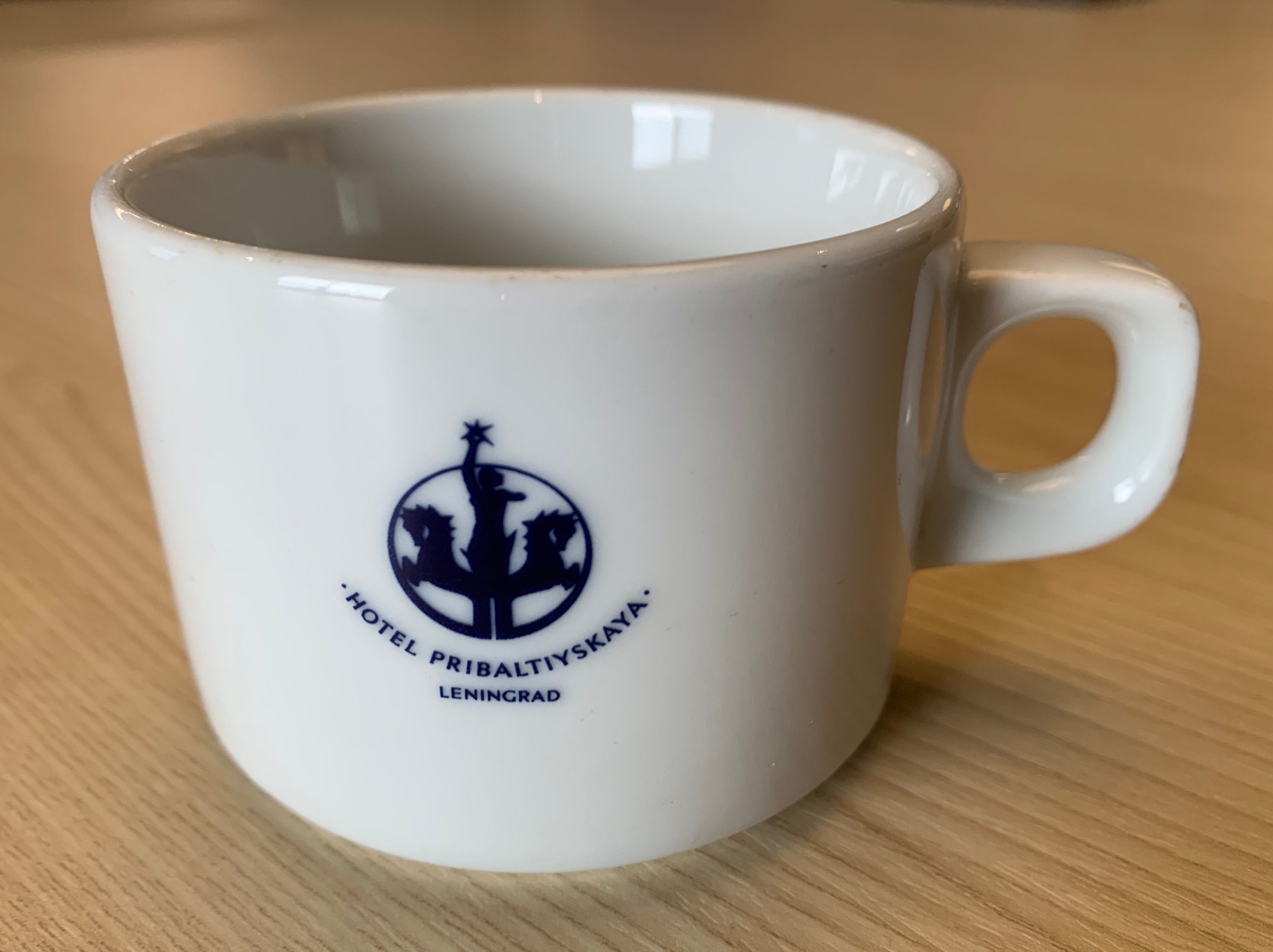
“Intourist” was the name of the state-run tourist agency that all foreign visitors were required to use when traveling in the Soviet Union. Funded in 1929, this state-run monopoly ended in 1992, when the Soviet Union collapsed, although it has continued on to this day as a private company.1 More importantly, Intourist was an integral, public-facing component of the KGB’s surveillance apparatus as well as a training ground, so every day throughout our trip, we were led around by Intourist guides who, in the 1980s, were mostly informants and a few KGB agents. We also stayed at the Intourist-owned and operated Hotel Pribaltiyskaya, a big, ugly modernist pile paved in expensive Italian marble and beautifully located on a waterfront site facing west, over the Gulf of Finland. But in the main lobby, we young architects all found it suspicious that the elevator banks were quite deep, and once inside, that the back walls of the standard-size elevator cabs had full-length mirrors. We were certain that there was enough space behind that mirror for someone in a concealed space to ride up and down, watching and listening to whatever was happening in the elevator. When we got to our floor, we noticed that at the far end of the corridor, an old lady with a head scarf—a babushka—sat at a gray metal desk with a big telephone, looking back towards us. We later noticed that there was a babushka at that desk 24 hours a day, watching everyone who came and went. Finally, when we got into our room, we were surprised to see a big, obvious microphone in the center of the ceiling. It was at least an inch in diameter with a 1960s-era domed metal screen covering it, and we got in the habit of saying things like “what time is the sub picking us up?” but nothing ever happened. Of the many memorable experiences we had in that city, beyond the hotel, three stand out in my mind, and they all had to do with surveillance, the feeling of being watched and controlled, and the growing paranoia we all felt with every passing day.
First, one night, a friend and I took a bus ride through the city. The doors to the bus were midway back, so there was no interaction with the driver when you got on or off the bus. To pay your fare, there was a clear plastic farebox—it looked like a cheap paper towel dispenser in a public restroom—mounted on a pole in the center of the bus, and it had only one moving part. You would drop a couple of kopeks – small, tinny coins worth a few cents – into a slot at the top, and then turn a plastic knob connected to a big roll of thin paper tickets far enough to get one ticket out of the slot and tear it off. The mechanism was so simple that you could turn it as much as you wanted to and tear off any number of tickets—like a roll of toilet paper. We watched people get on and off, but we didn’t really notice how the honor system really worked until we pulled up to one stop and a man got on the bus with a shopping bag. As the bus pulled away from the curb, he extracted a single kopek coin from his pocket, held it up for all to see, dropped it in the slot, turned the knob, and tore off one ticket. He did all this in a very exaggerated, almost dramatic fashion, and then held the ticket up and turned back and forth, facing forwards and backwards on the bus, so that everyone could see he had paid his fare, although few seemed to notice or care. And that’s when the penny dropped for me, so to speak: In the USSR, you don’t know who is watching you, so you must assume that everyone is watching you, all the time.
On another night, six of us were walking around the city together, marveling at the beautiful neoclassical architecture. And then, as we crossed a deserted street, two police officers materialized out of the dusk, ambled over, and told us to stop. They had batons that looked more like what an orchestra conductor would use, which they waved around and gestured with in a vaguely intimidating way that led one classmate to later call them “jabber sticks.” One of them knew enough English to tell us that we were jaywalking, so we apologized and started to walk away, but then he said,
“Stop: One ruble.”
Back then, a ruble was worth about $1.20, so someone giggled, and someone else produced a small, grubby one-ruble note. But then the other officer, perhaps offended by the giggle, said,
“Nyet,” and pointed at each of us, counting off, “One, two, three, four, five, six. Six rubles.”
That’s when we all thought, let’s pay these guys and get out of here fast, before they do more advanced arithmetic. We were certain that the fee associated with jaywalking was “discretionary,” and that those police officers each took three rubles home that night.
The third experience was the most chilling. On our last night there, my roommate and I were sitting in the hotel bar, drinking Johnnie Walker Black on the rocks, paid for with our American Express cards that were meant to be used just in emergencies. As we were talking to the bartender, we heard a very loud and crazy screaming that sounded almost like a wild animal. The bar was right off the lobby, and we turned to watch five police officers carrying a thrashing, screaming man—one each holding an arm, a leg, and the head—and hauling him out of the building, onto the street, into a waiting van, and off to who knows where. We were told later that it was a Russian guy who had been caught trading money with a foreigner, which was a very serious crime in the 1980s, punishable by hard labor, long prison sentences, and even execution, in cases of large amounts.2 By the way that man was screaming, he must have had a pretty good idea of what the future held for him. It was over forty years ago, and I still remember that terrible sound.
The Theory
Philosophers have spent a lot of time thinking and writing about surveillance, and the conversation always begins with the founder of utilitarianism, Jeremy Bentham, and his idea of the Panopticon. Bentham envisioned the use of his idea in a variety of institutional settings, like hospitals, schools, and factories, but it caught on with prison design, where a single guard can watch over hundreds of prisoners. Picture a multi-story building that is circular in plan, with a single row of cells lining its exterior wall, facing inward, and a guard tower in the center. The windows of the guard’s station are obscured, so while that one guard can see into all the cells, the inmates cannot tell where he is looking and when, so they all feel as if they are being watched all the time, compelling a form of “self-regulation.” As the philosopher Michel Foucault observed,
“He who is subjected to a field of visibility, and who knows it, assumes responsibility for the constraints of power; he makes them play spontaneously upon himself; he inscribes in himself the power relation in which he plays both roles; he becomes the principle of his own subjection.”
Moral and legal philosopher David Lyons expands on Foucault, describing a paradox that adds nuance to the effect of the panopticon on those being surveilled:
“The sharp end of the panoptic spectrum may generate moments of refusal and resistance that militate against the production of Foucault’s ‘docile bodies,’ whereas the soft end seems to seduce participants into a stunning conformity of which some seem scarcely conscious.”3
The Lesson
That babushka sitting at the end of our hallway in the Hotel Pribaltiyskaya, watching all the doors and who is coming and going, illustrates how the Panopticon works, both physically and psychologically. Lyons’ idea of a “panopticon spectrum” sheds light on the actions of that screaming money trader, who holds down the sharp end with his futile resistance and refusal as he is being hauled out of the hotel lobby; the cops we had to payoff fall somewhere in the middle ground; and that man paying his fare on the bus holds down the soft end of the spectrum of unconscious conformity, although he was actually pretty conscious of what he was doing. The big point—both theoretically and in terms of what I experienced in St. Petersburg—is that surveillance affects the surveilled. I’ll never forget the sense of relief my classmates and I all felt when our bus recrossed the border, back into Finland. The feelings of oppression and paranoia that grew over those six days we spent in the USSR were powerful, and none of us could imagine what it would be like to live one’s whole life in a place like that, generation after generation.
So far, we have been talking about physical surveillance, based on early modern physical structures, like the panopticon, but 21st Century surveillance operates at a different level—or levels—integrating digital technologies, vast databases, cameras, and facial recognition software. In their book Liquid Surveillance, David Lyons and Zygmunt Bauman discuss the meaning and impact of these and other late modern technologies, leading Lyons to ask Bauman, “Does liquid surveillance mean forgetting the panopticon?” For the answer to that question, tune in to the next episode for Part 2 of Surveillance.
“Surveillance is permanent in its effects, even if it is discontinuous in its action.”
- Michel Foucault
“Security without freedom means slavery.”
- Zygmunt Bauman
Thanks to Wikipedia for the background on Intourist.
And thanks again to Wikipedia for the background on money-trading and the punishments for it.
Bauman, Zygmunt and David Lyon, Liquid Surveillance, Malden, MA. Polity Press, 2013; Wikipedia for general background on Bentham and the Panopticon.